Kegel Mythbuster
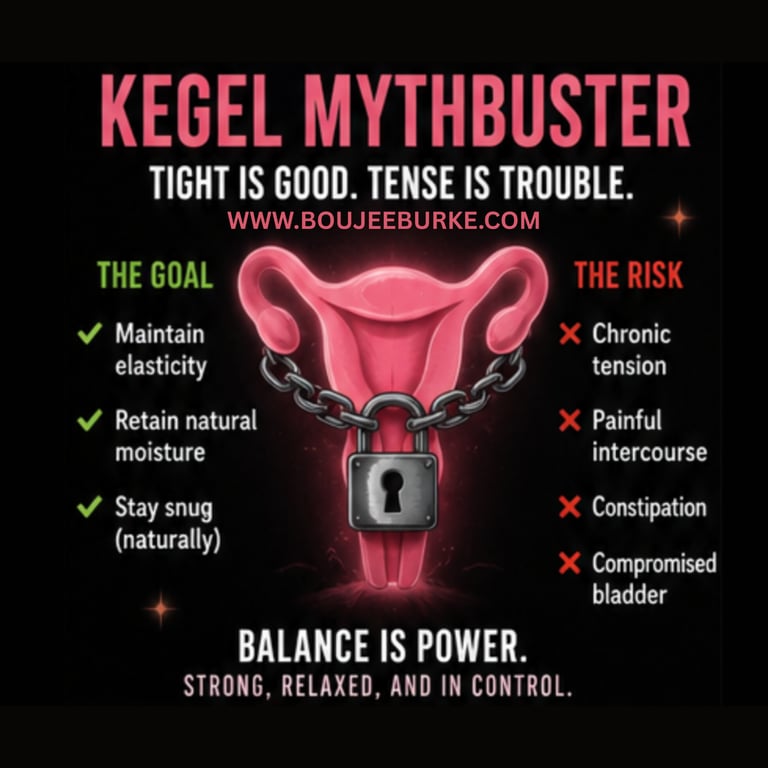
More Kegels don't always mean better results. Bust the biggest pelvic floor myths and learn why strength, relaxation, and balance matter more than constant squeezing.
WOMENBBFFGROINKEGELVAGINAL HEALTH
Developing the habit of contracting just for the fuck of it doesn't magically make you healthier, tighter, or better in bed. If anything, it can leave you a little too... uptight. 😏
Your pelvic floor wasn't designed to stay clenched all day. It was designed to contract when needed and relax afterward. That constant cycle of contraction and release is what keeps the muscles healthy.
In severe cases, women may experience pelvic pain, painful intercourse, bladder dysfunction, constipation, or simply feel like everything down there is in a constant state of guarding—almost "fused shut."
That constant state of tightening isn't excersize, girl that's a confused vagina!
Myth #4: Tighter Is Always Better
Healthy muscle tone and chronic tightness are two completely different things.
A healthy pelvic floor should support your pelvic organs, assist with bladder and bowel control, contribute to pleasurable intimacy, and still be capable of stretching and relaxing when necessary. That last part matters. The pelvic floor must relax during bowel movements. It must relax during intercourse. It must relax during childbirth. All that strength without flexibility is imbalance. Get it?!
Now here's where I'm probably going to lose a few people...
Realistically speaking?
The simplest way to help preserve your body's natural elasticity is by minimizing unnecessary wear and tear. So, reducing the overall "flow of traffic" and restricting access to only a select few isn't just a relationship decision—it can also be one of the most practical ways to reduce repetitive strain over time.
That means giving your body opportunities to recover instead of treating your pelvic floor like it's supposed to perform on demand 24/7. Contrary to what some people may believe, the goal isn't becoming so tight you're practically virginal again. The goal here is remaining comfortably snug, healthy, functional, and pain-free. Every. Single. Day.
When Kegels Can Actually Make Things Worse
Like any exercise, Kegels are only beneficial when they're appropriate and performed correctly. Doing them excessively—or doing them when you don't actually need them—can create problems instead of solving them. Wanna know another common mistake? Using the wrong muscles entirely. Yea I said it: some of ya'll don't even know wtf you all are doing!
Many women unknowingly squeeze their glutes, thighs, or abdominal muscles instead of their pelvic floor. If the wrong muscles are doing all the work, the exercise loses much of its intended benefit.
And yes... Technique matters just as much as repetition.
So... Should You Do Kegels? Absolutely—if you actually need them.
Pelvic floor exercises have helped countless women recover after childbirth, manage certain types of urinary incontinence, and rebuild muscle strength after injury or surgery. But they aren't a universal prescription.
Some women need strengthening. Others need relaxation. Some need both. That's why listening to your body—and, when necessary, consulting a qualified pelvic floor physical therapist—is far more valuable than following one-size-fits-all advice from social media.
The bottom line:
Mindlessly recommending Kegels to every woman for every problem is harmful and insipid af. And us actually doing them is even worse! From what I've presented here, a healthy pelvic floor isn't one that's permanently clenched, it's one that's responsive—strong enough to provide support, flexible enough to relax, and coordinated enough to do both when the situation calls for it.
Sometimes the healthiest thing you can do isn't squeezing harder; it's learning when to let go.
Sources:
Reborn Pelvic Health & Wellness. Top 4 Kegel Myths Busted.
Catalyst Physical Therapy. Kegel Myths Busted.
Catalyst Physical Therapy. When Kegels Can Do More Harm Than Good.
For decades, women have been told the same thing: "Do your Kegels." They're recommended for everything from improving bladder control to enhancing intimacy and "keeping things tight." Somewhere along the way, pelvic floor exercises became the universal answer to nearly every feminine concern below the belt.
Here's the thing though: pelvic floor health isn't nearly that simple.
Like most things involving the human body, balance matters more than extremes. A healthy pelvic floor isn't just strong—it also has to be flexible, coordinated, and capable of fully relaxing. That's the part many conversations leave out.
LET'S SEPERATE FACTS FROM FICTION:
Myth #1: The More Kegels You Do, the Better the Results
Nope. It's an easy assumption to make. If a few contractions are beneficial, then squeezing throughout the day should produce even better results... right? Again, no.
Your pelvic floor muscles behave like every other skeletal muscle in your body. They contract, they relax, and they recover. Constantly asking them to stay engaged doesn't create healthier muscles—it creates exhausted ones. Do you really wanna walk around with a tired cooch?
Research and pelvic floor specialists have increasingly emphasized that overdoing Kegels may contribute to an overly tight pelvic floor, medically known as pelvic floor hypertonicity. Instead of becoming stronger and more functional, the muscles remain in a chronic state of tension, making it difficult for them to relax when they're actually supposed to. In turn, the sensation may very well be tougher rather than tenderized - from a man's 'perspective'.
Think of it this way: if you walked around flexing your bicep or clenching your fist all day long, your arm wouldn't become stronger—it would become sore, stiff, and eventually dysfunctional. Your pelvic floor operates the same way. The healthiest muscle is the one that knows when to contract—and when to completely let go.
Myth #2: Every Woman Should Be Doing Kegels
This is where blanket advice gets women into trouble. Ahem: not all pelvic floor dysfunction is caused by weakness. Some women already have pelvic floor muscles that are too tight. In those cases, repeatedly performing Kegels can actually make symptoms worse.
An overactive pelvic floor contributes to:
Pelvic pain
Pain during intercourse
Lower back, hip, or tailbone discomfort
Constipation
Difficulty emptying the bladder completely
Increased urinary urgency and frequency
Muscle spasms caused by chronic tension
In these situations, the goal is restoring balance by teaching those muscles how to relax again because a pelvic floor that's permanently "on" isn't functioning properly. I hate to break it to you.
Myth #3: Randomly Squeezing Throughout the Day Keeps You Tight
Let's address one of the newer trends floating around social media. Some women have developed the habit of squeezing their pelvic floor whenever they think about it—while driving, sitting at work, standing in line, scrolling their phones, or simply because someone online told them they should always be "engaged."
Respectfully...
Stop.
Get In Touch:
adm@boujeeburke.com
grievances: hbic@boujeeburke.com
Full disclosure: Some of the links on this site are affiliate links, which means if you click through and make a purchase, I. Burke may earn a small commission (at no extra cost to you). It helps keep the lights on while I bring you legit promotions and handpicked gems—because nobody likes shady deals, least of all me. Disclosure: This site is part of a network of independently operated niche websites under the same ownership. Affiliate or monetized content is disclosed where applicable. Please feel free to reach out for inquiries, feedback, or partnership opportunities. Boujee Burke is open to suggestions, & mutually beneficial partnerships.